

Project: Hospital Design
Location: Mohali
Type: Architecture Student Project – Semester VI
Designed By: Suraj Kumar / Instagram LinkedIn
Institute: Lovely Professional University
Architectural Features I Implemented
1. Climate-Responsive Form & Concept
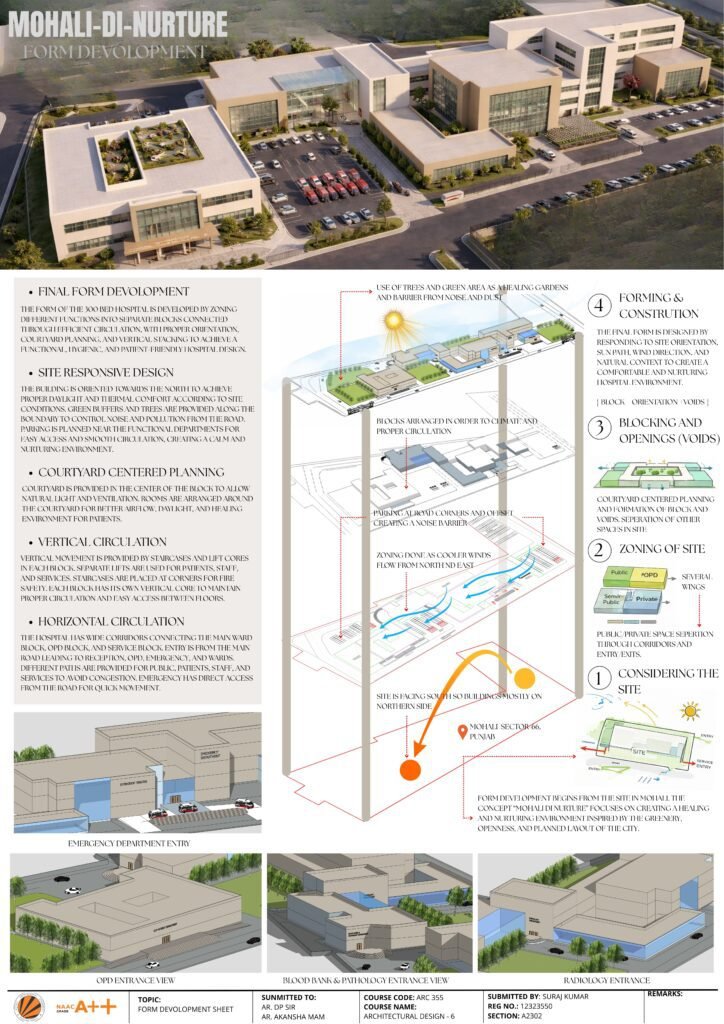
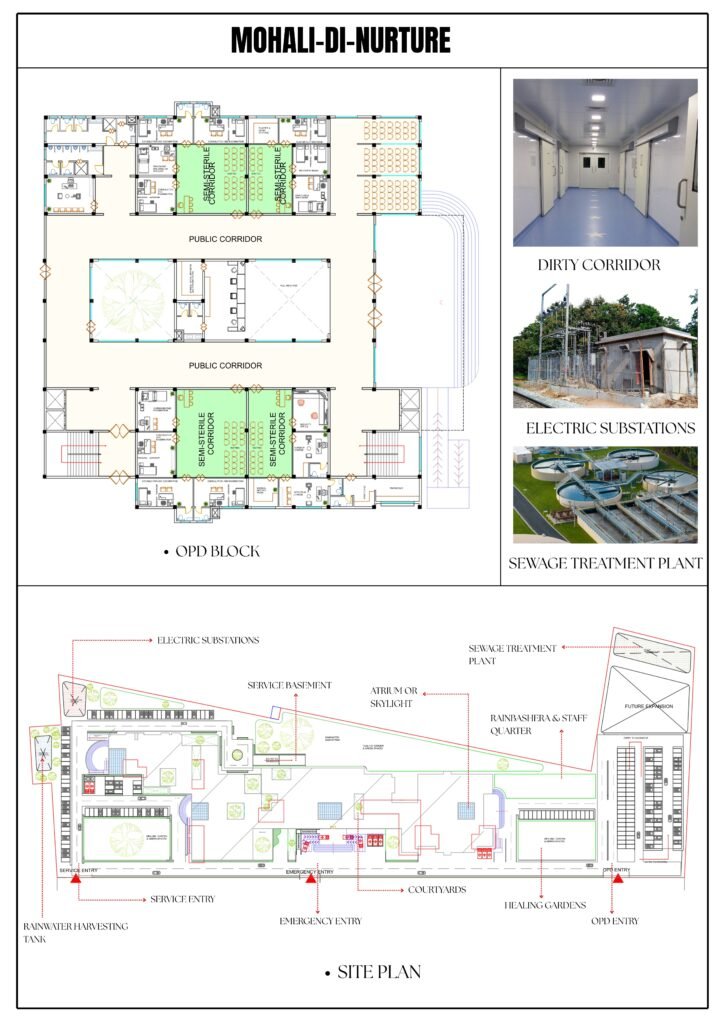
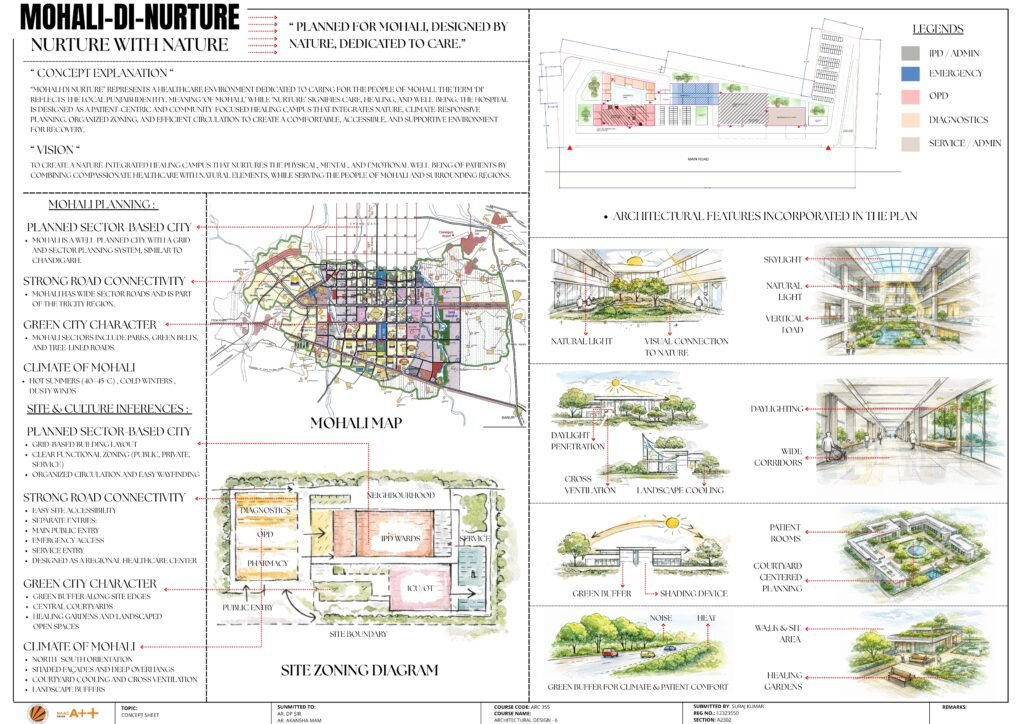
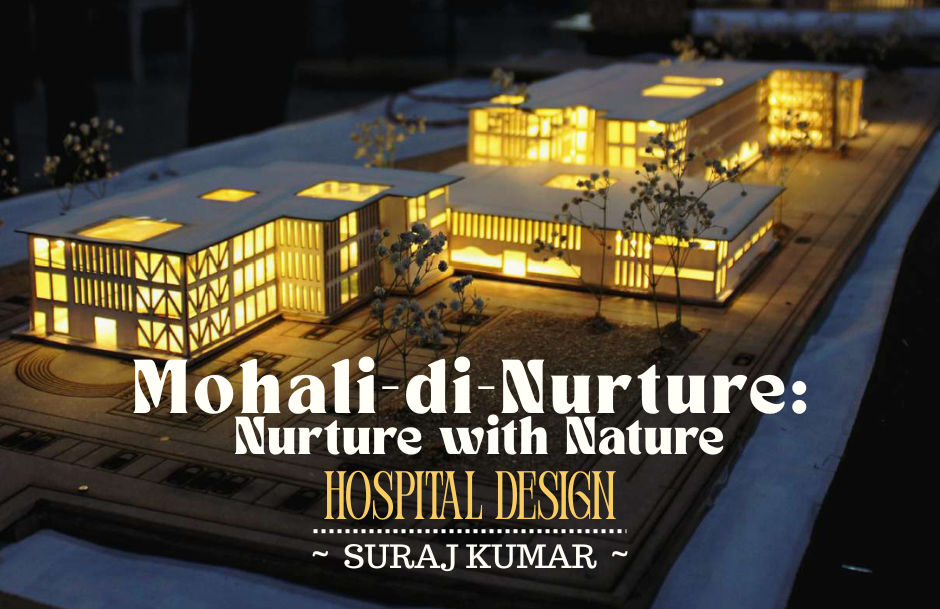
- Mohali di Nurture: I grounded the 300-bed facility in this concept, utilizing regional openness and biophilia to create a therapeutic environment.
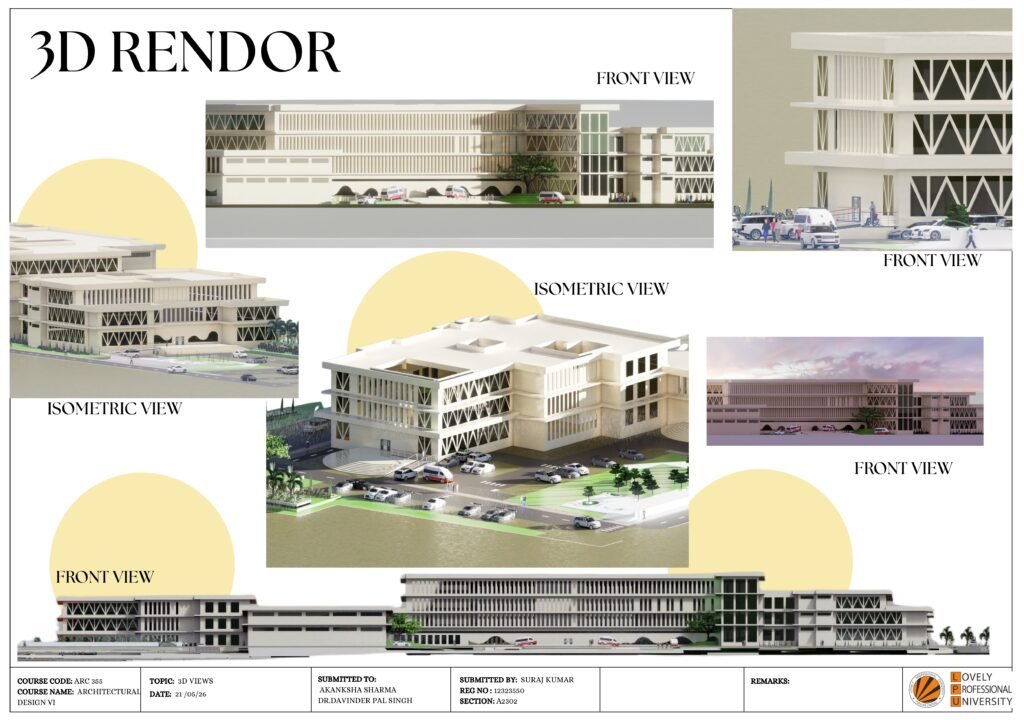
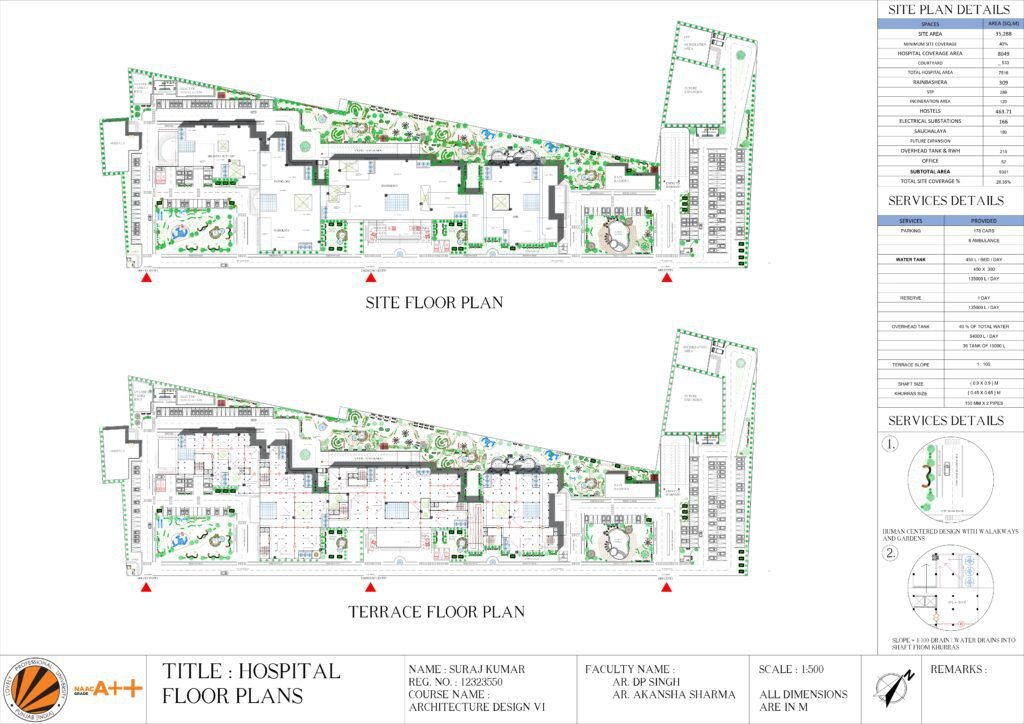
- Passive Climate Orientation: I pushed the main building massing to the north to block the harsh southern sun and oriented blocks to channel cooler North and East winds.
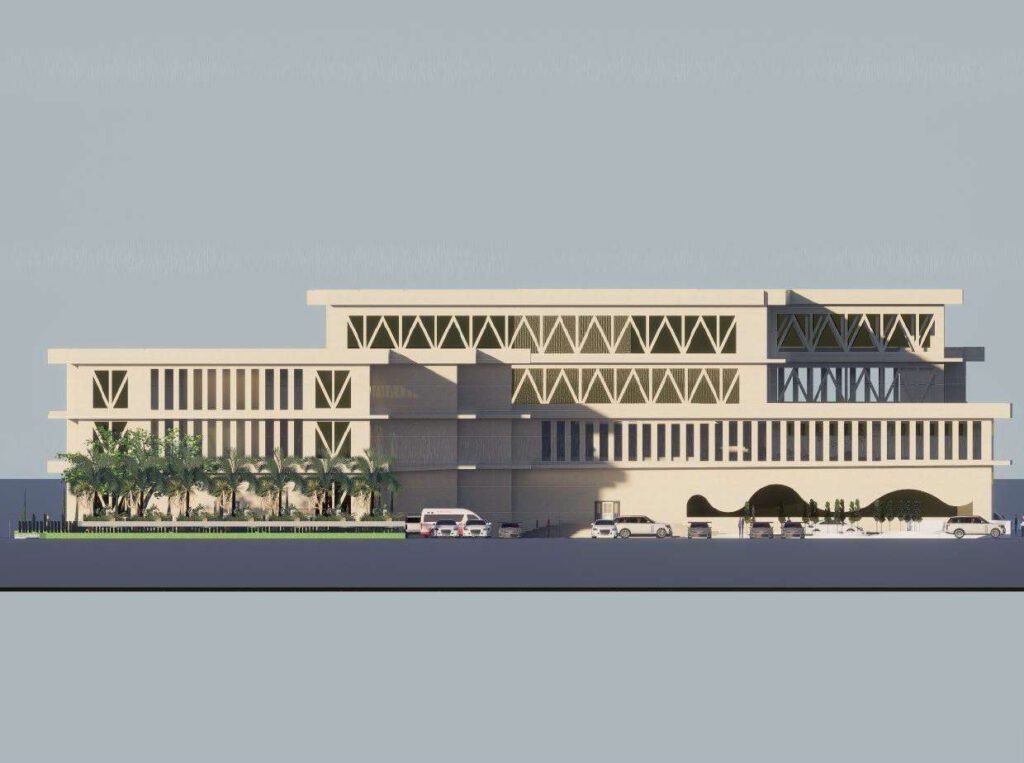
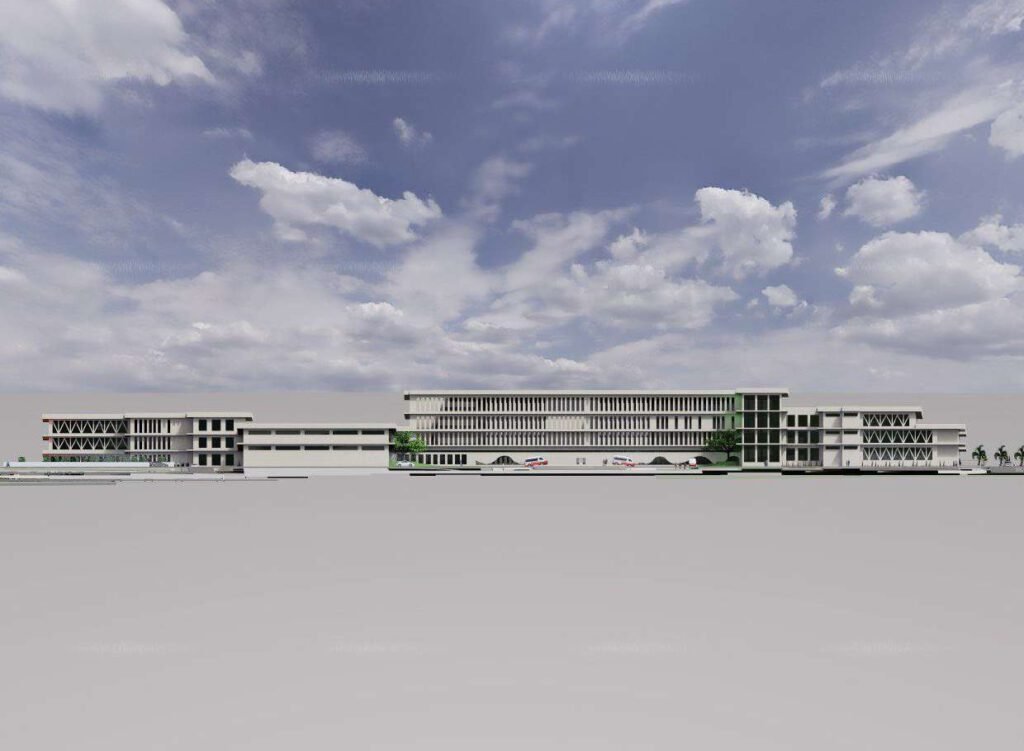
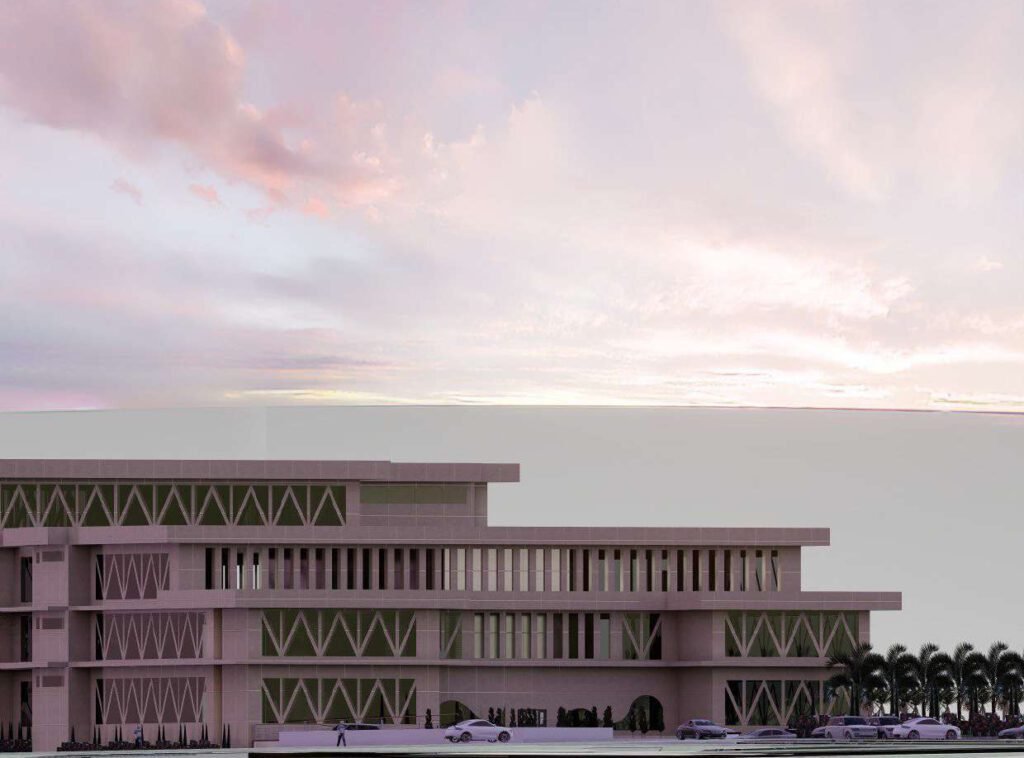
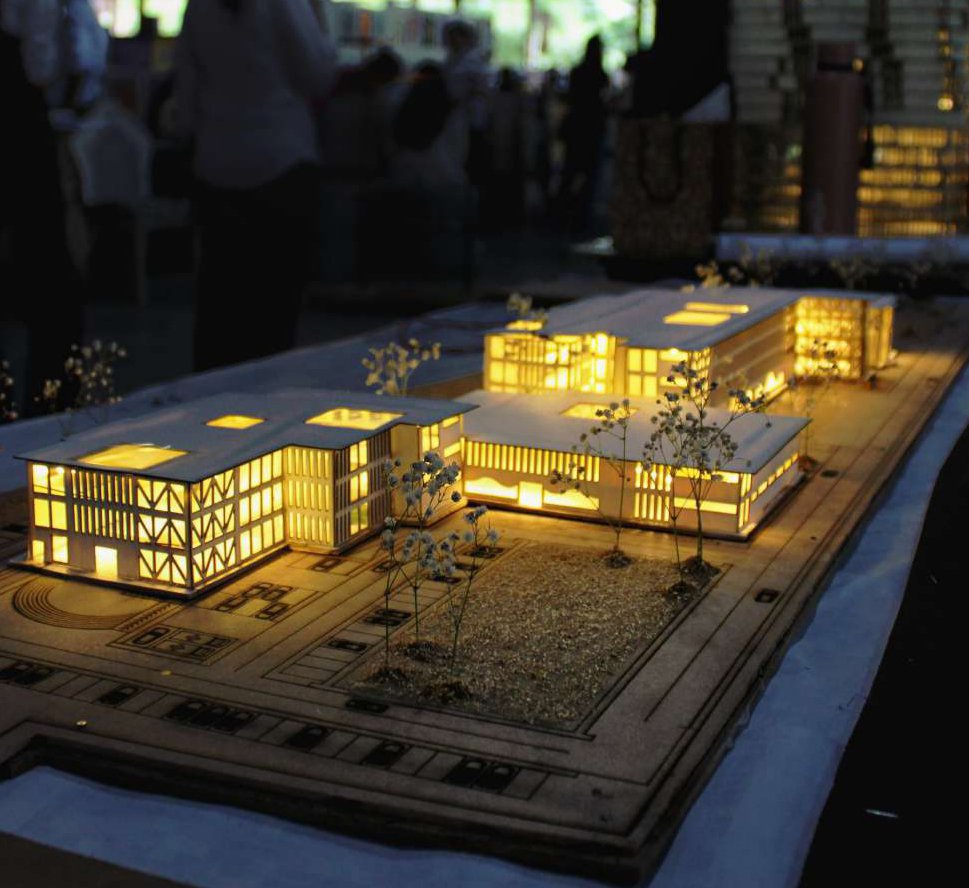
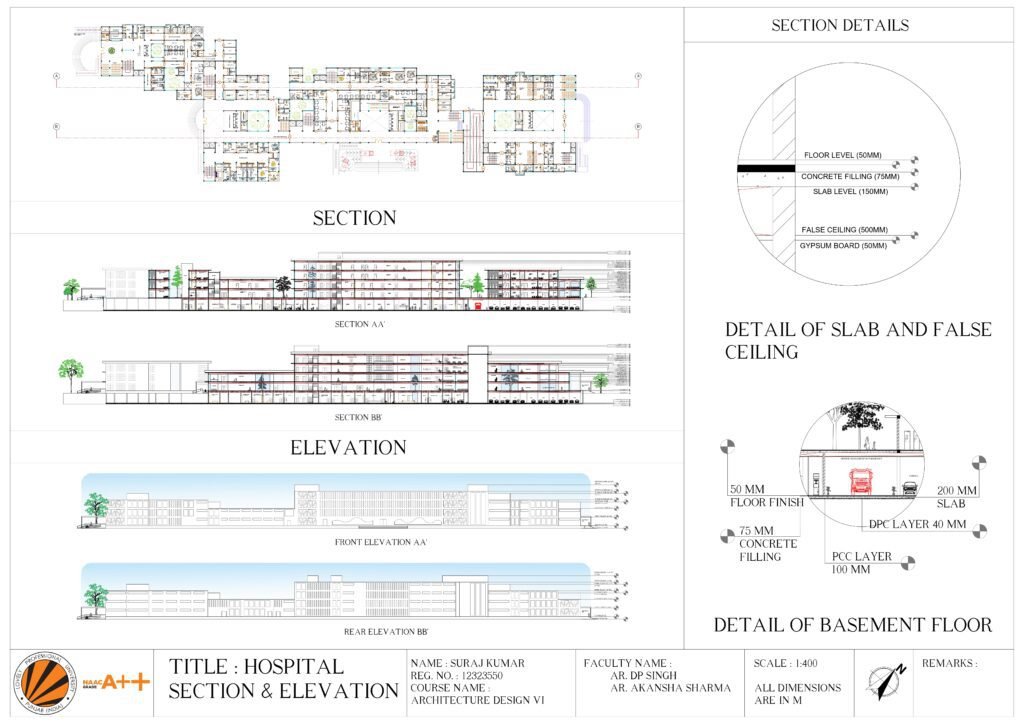
- Sustainable Envelope: I specified fly-ash bricks for eco-friendly thermal mass and wrapped the facade in a traditional brick jaali language.
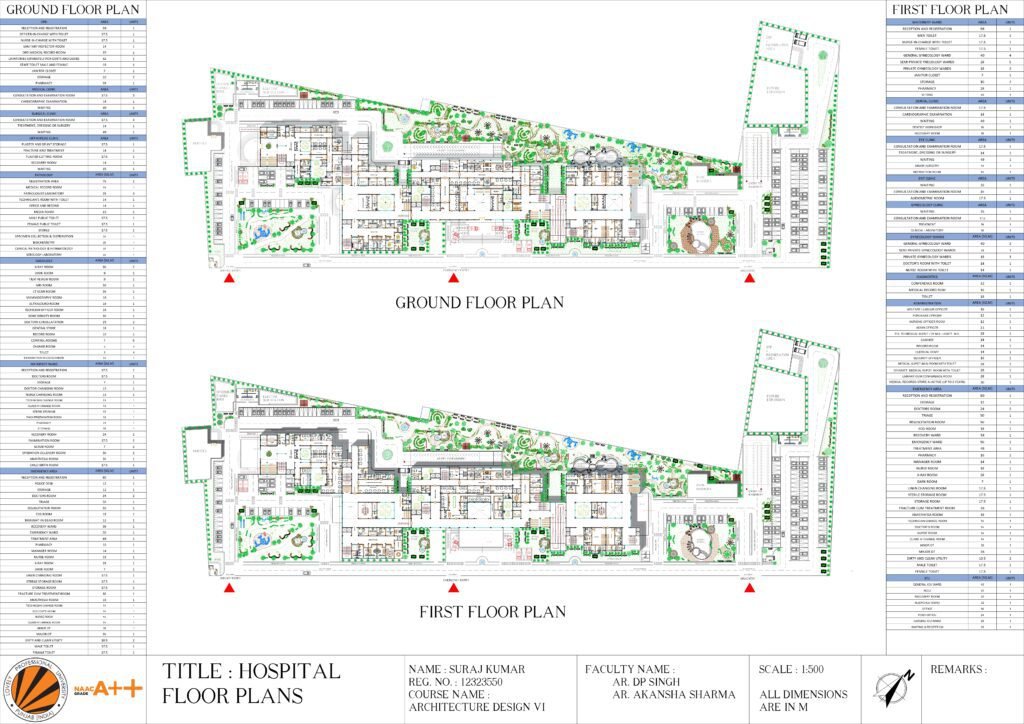
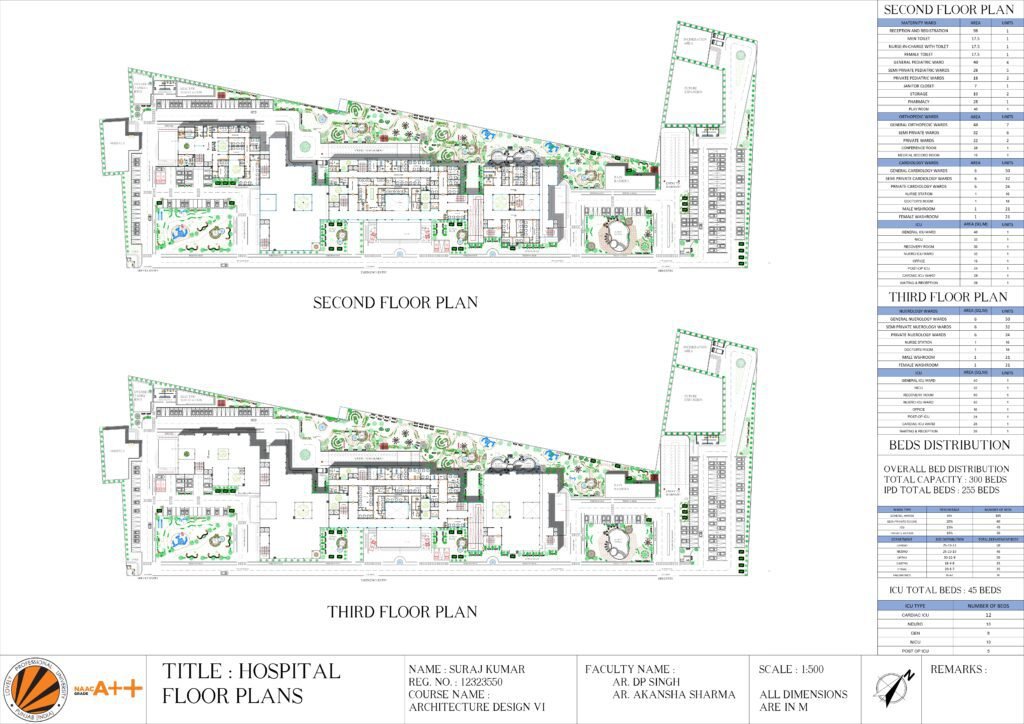
- Courtyard Planning: I interspersed multiple open-to-sky courtyards across the floor plates to give every ward and patient room direct daylight and natural cross-ventilation.
2. Zoning, Flow & Innovation
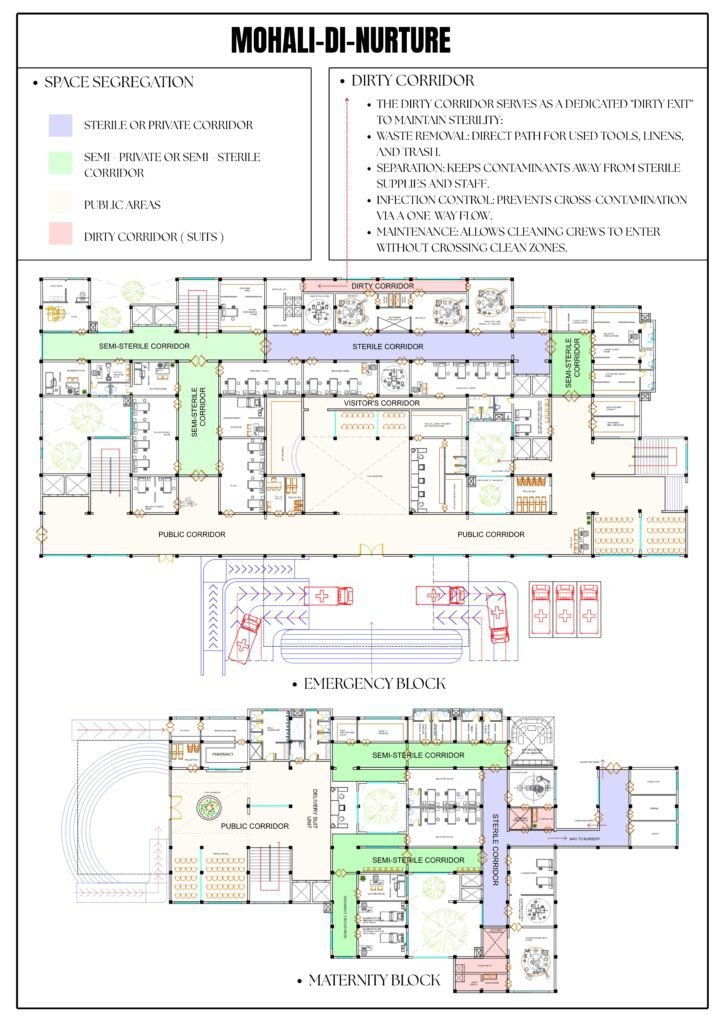
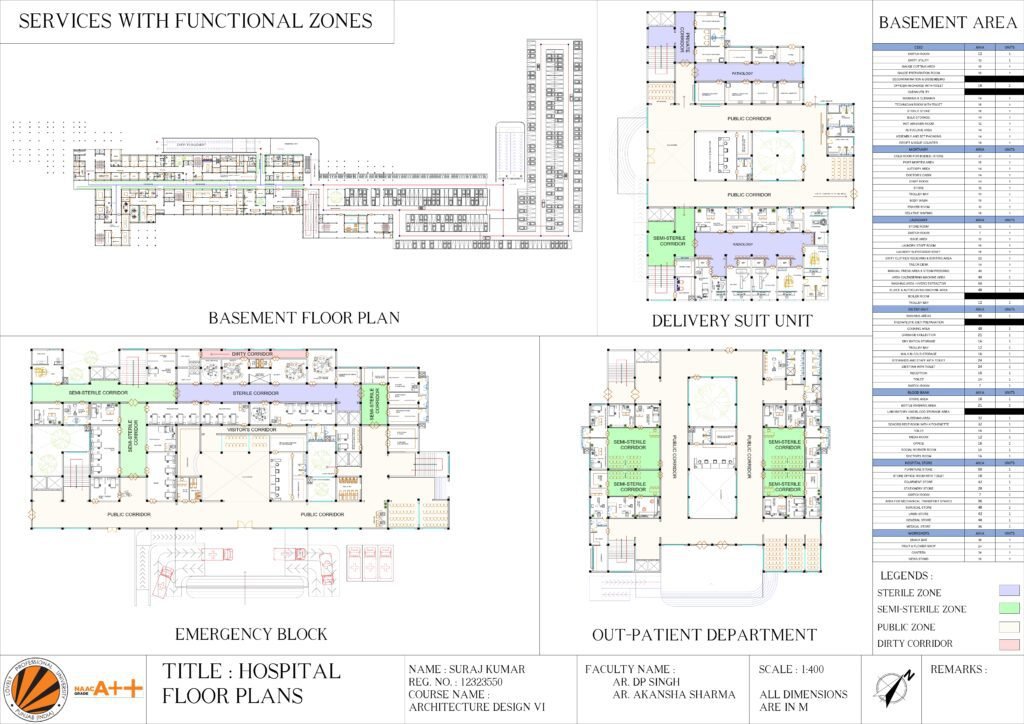
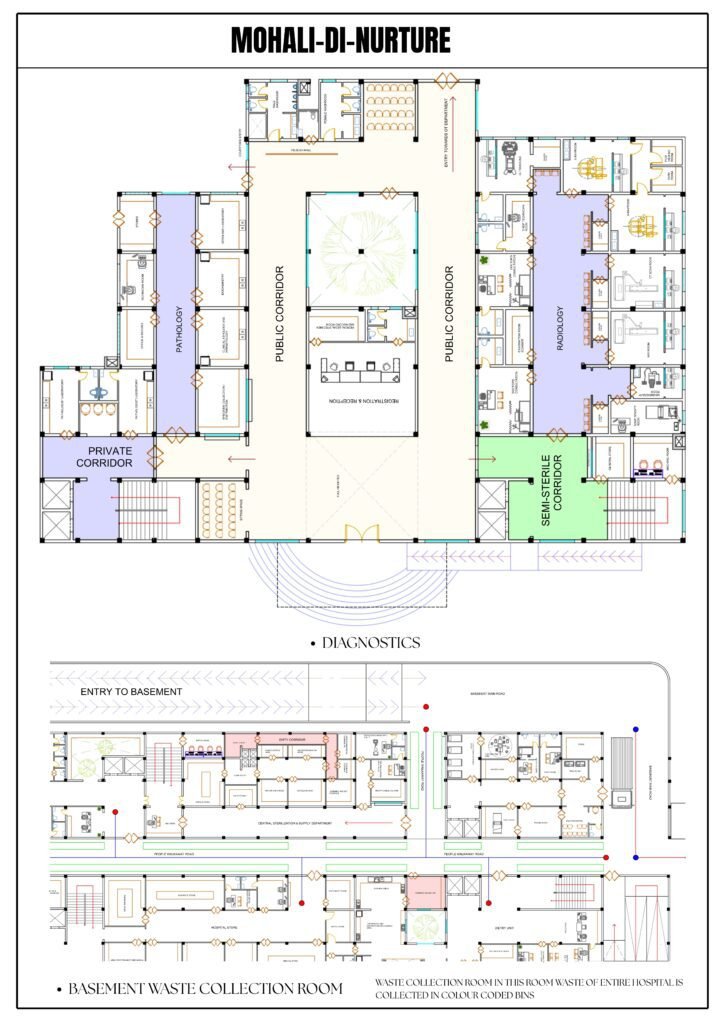
- Strategic Block Segregation: I isolated the blocks—OPD, Maternity, Diagnostics, and Emergency—to eliminate heavy traffic bottlenecks and streamline workflows.
- Strict Infection Control (Dirty Corridor): I integrated a dedicated “Dirty Corridor” system in the high-acuity zone, creating a strict one-way exit route for medical waste to prevent cross-contamination into sterile areas.
- Silver-Ion GRC Jaali: My main innovation is a Glass Reinforced Concrete jaali treated with silver ions, placed specifically in front of the OT complexes. It acts as an active antimicrobial shield against pathogens while blocking the south sun to lower the OT’s heavy mechanical heat load.
- Universal & Landscape Design: I followed strict accessibility norms for differentially-abled individuals using seamless ramp systems, and designed a layered, sunken landscape to serve as a natural noise and dust barrier.
What I Learned Through This Project
- Workflow over Aesthetics: I learned that a hospital is a living machine. Designing the clean vs. dirty corridor segregation taught me that architectural zoning directly impacts patient mortality and infection rates.
- Multifunctional Material Innovation: Developing the silver-ion GRC jaali showed me that a single architectural element can simultaneously solve structural styling, active bio-chemical protection, and passive thermal cooling.
- Biophilia is Critical to Healing: Integrating internal courtyards and sunken gardens taught me that psychological comfort is a form of medicine. True healthcare design must balance rigid clinical codes with calming, natural spaces.
- Empathy in Universal Design: Designing seamless, safe transitions between fast-moving emergency vehicles and vulnerable, differentially-abled patients forced me to prioritize human dignity and absolute accessibility over form.