

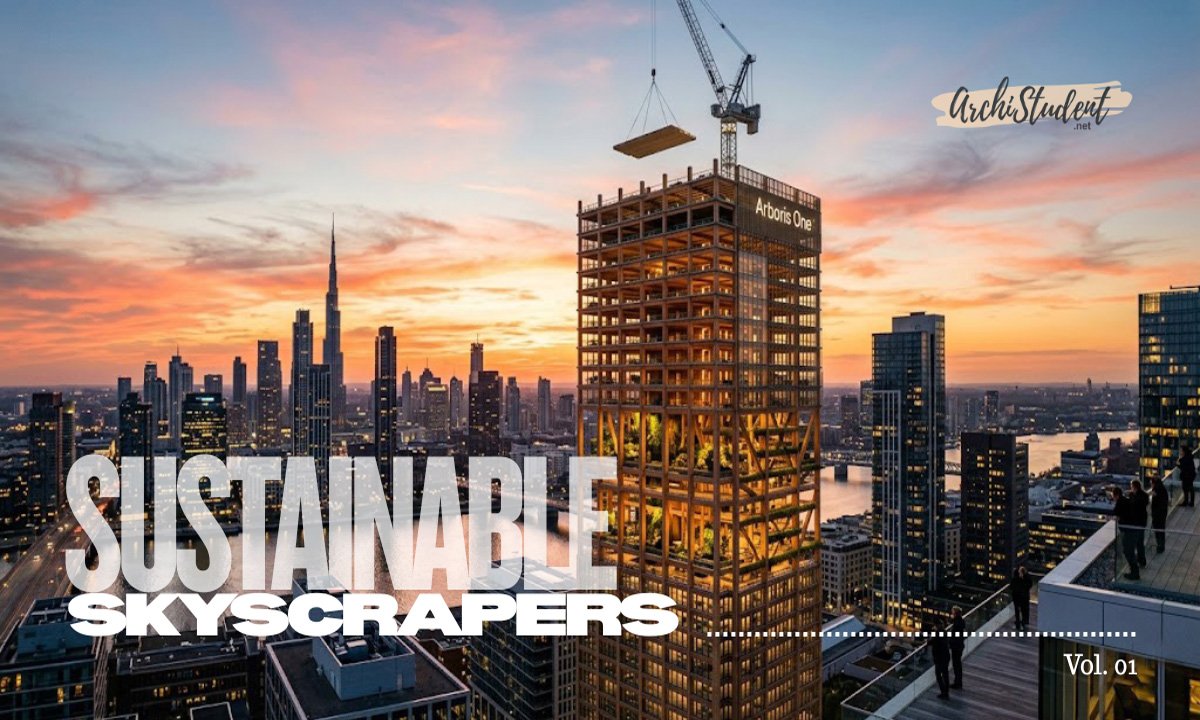

(May 2026 Architectural Trend Analysis)
The skyscraper is shedding its cold, concrete skin. This month, the architectural world is transfixed by a new silhouette rising against the traditional urban grid: the mass timber high-rise. From the recent topping-out of new projects in Vancouver and Stockholm to the planned 100-story hybrid towers in Tokyo, “wood” is no longer just for low-rise residential. It is the primary tech of the future city.
As an architect or designer, mastering this structural shift isn’t just an aesthetic choice; it is a necessity driven by carbon sequestration goals, pre-fabrication efficiency, and a fundamental rethink of detailing.
Below is your complete guide to the Mass Timber Revolution, featuring the essential resources, professional gear, and the technical libraries you need to lead the charge.
1. The Carbon Math: Why Wood Wins Now
The most searched topic in sustainable architecture this month is Embodied Carbon. Concrete and steel production are responsible for nearly 15% of global CO2 emissions. In contrast, mass timber stores carbon. For every cubic meter of wood used, you effectively lock away a ton of carbon for the life of the building.
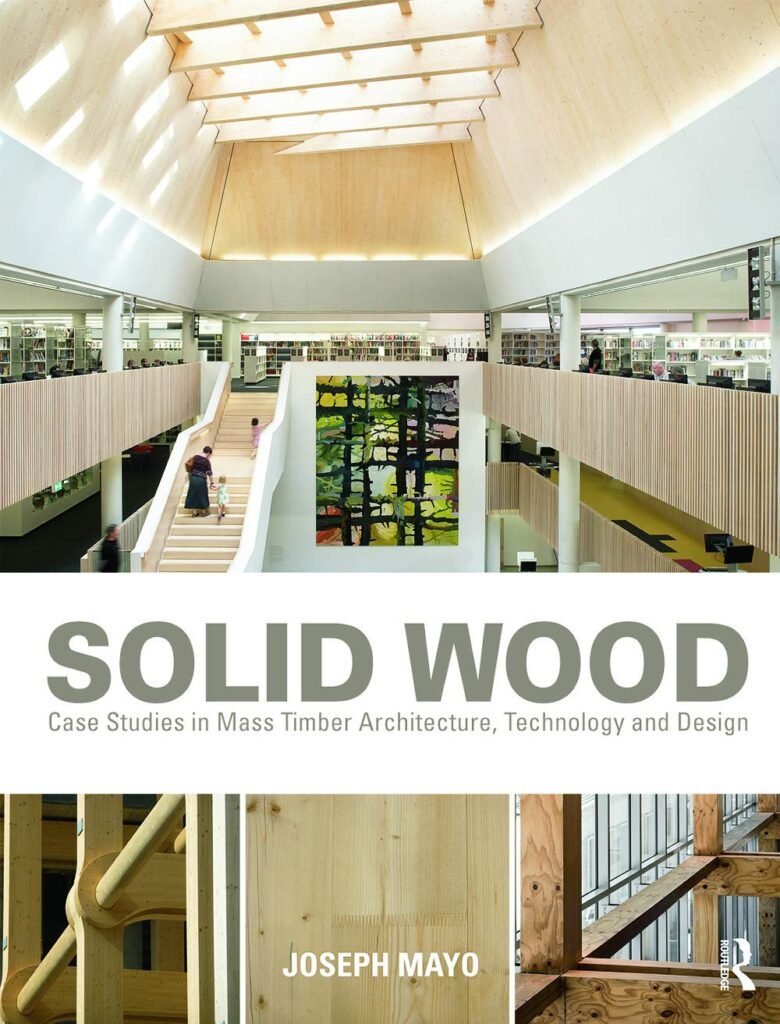
- The Critical Read: To understand the physics and ethics driving these giants, add this to your library. Solid Wood: Case Studies in Mass Timber Architecture is the industry’s most trusted manual on high-rise timber construction.
2. The Biophilic Premium: Wellness at Scale
Beyond the environment, there is the human element. “Biophilic Design” is trending in 2026 because it has a measurable ROI. Occupants in timber-exposed office spaces report lower stress levels and 15% higher productivity. When you design with exposed wood, you aren’t just building a structure; you’re building a wellness product that clients will pay a premium for.
3. High-Precision Tools for the Timber Architect
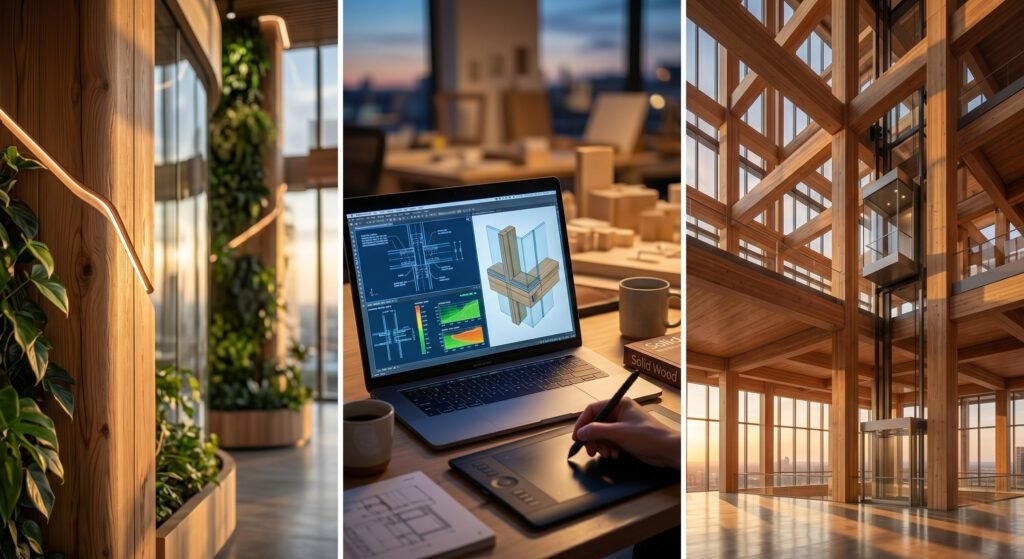
Mass timber requires a higher level of precision in the “Design for Manufacturing and Assembly” (DfMA) phase. Because CLT panels are factory-cut by CNC machines to millimeter tolerances, your BIM models must be flawless.
- The Digital Edge: High-fidelity detailing requires raw hardware power. If you are modeling complex CLT connections in Revit, Rhino, or Vectorworks, the Apple 2024 MacBook Pro (M4 Max) or a dedicated workstation with 64GB of RAM is non-negotiable for handling massive 3D geometry and real-time visualization.
4. Master the Details: Don’t Reinvent the Wheel (ArchShelf Exclusive)
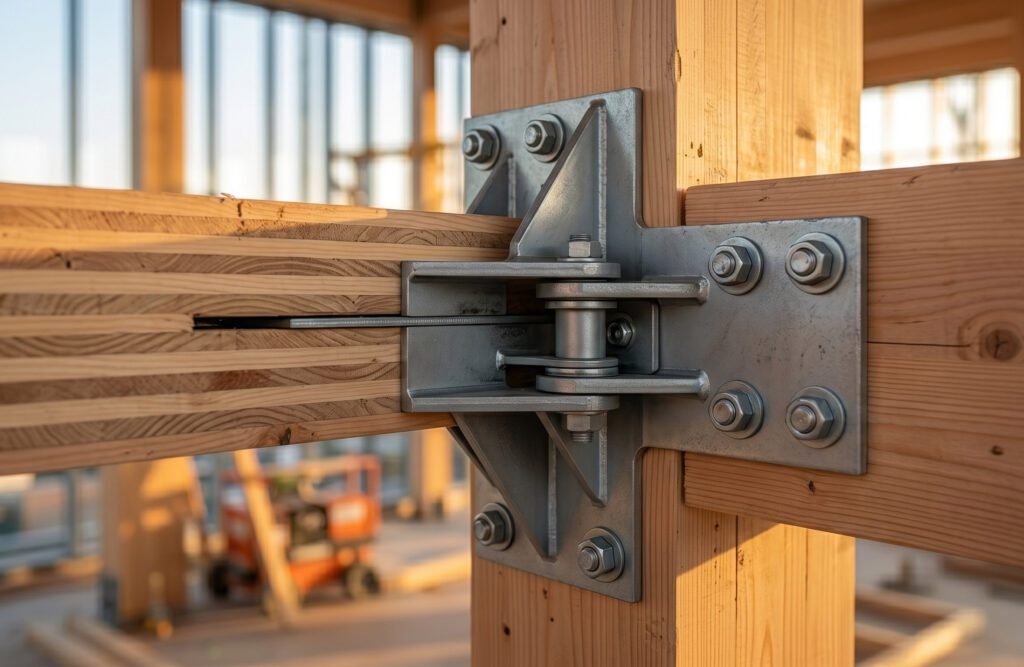
The biggest hurdle for architects moving into mass timber is the lack of standardized detail libraries. You shouldn’t have to reinvent the wheel for every structural connection, fire-rated joint, or thermal break.
I have curated a professional-grade set of resources specifically for this new era of hybrid design. Whether you need verified CAD blocks, BIM components, or comprehensive design templates, check out my exclusive digital libraries on Gumroad:
👉 Download the Professional Architecture Detail Kits at ArchShelf
By utilizing these pre-verified detail sets, you can reduce your drafting time by up to 40% and focus your effort where it matters: the iconic form and the social impact of your building.
5. Essential Reading List for 2026
If you are looking to deepen your expertise this month, these three books are trending in academic and professional AIA circles:
- The New Carbon Architecture: A foundational text on utilizing regenerative materials to meet 2030 challenge goals.
- Tall Wood Buildings: Design, Construction and Performance: The primary technical “bible” for designing high-rise timber structures.
- Manual of Section: Essential reading to understand the unique verticality and innovative spatial relationships possible in timber skyscrapers.
Conclusion: The Future Skyline is Regenerative
The mass timber movement represents more than just a change in material—it’s a change in the architect’s role. We are shifting from being just “constructors” to becoming stewards of a regenerative cycle. The future skyline is looking lighter, smarter, and greener.
Ready to level up your technical library for the timber era? Visit ArchShelf on Gumroad to download the professional templates used by top sustainable design firms today.
(As an Amazon Associate, I earn from qualifying purchases.)


