

Step into a timber frame home and you’ll notice it immediately- the warmth, the weight, and the quiet strength of true craftsmanship. The feeling settles in before you even realize why.
In the U.S., wood framing still dominates single-family construction, according to the National Association of Home Builders. Yet, while most homes use wood in hidden, uniform ways, timber framing puts it on full display. Beams, joints, and trusses aren’t just structural; they define the character and soul of the space.
Every beam and joint tells a story of skill and intention, giving these homes a timeless appeal of strength, character, and grace. Whether you’re an architecture enthusiast or planning your own home, timber frames have lessons to offer. Let’s explore the architectural details only a timber frame can deliver.
1. Exposed Beams That Define the Entire Space
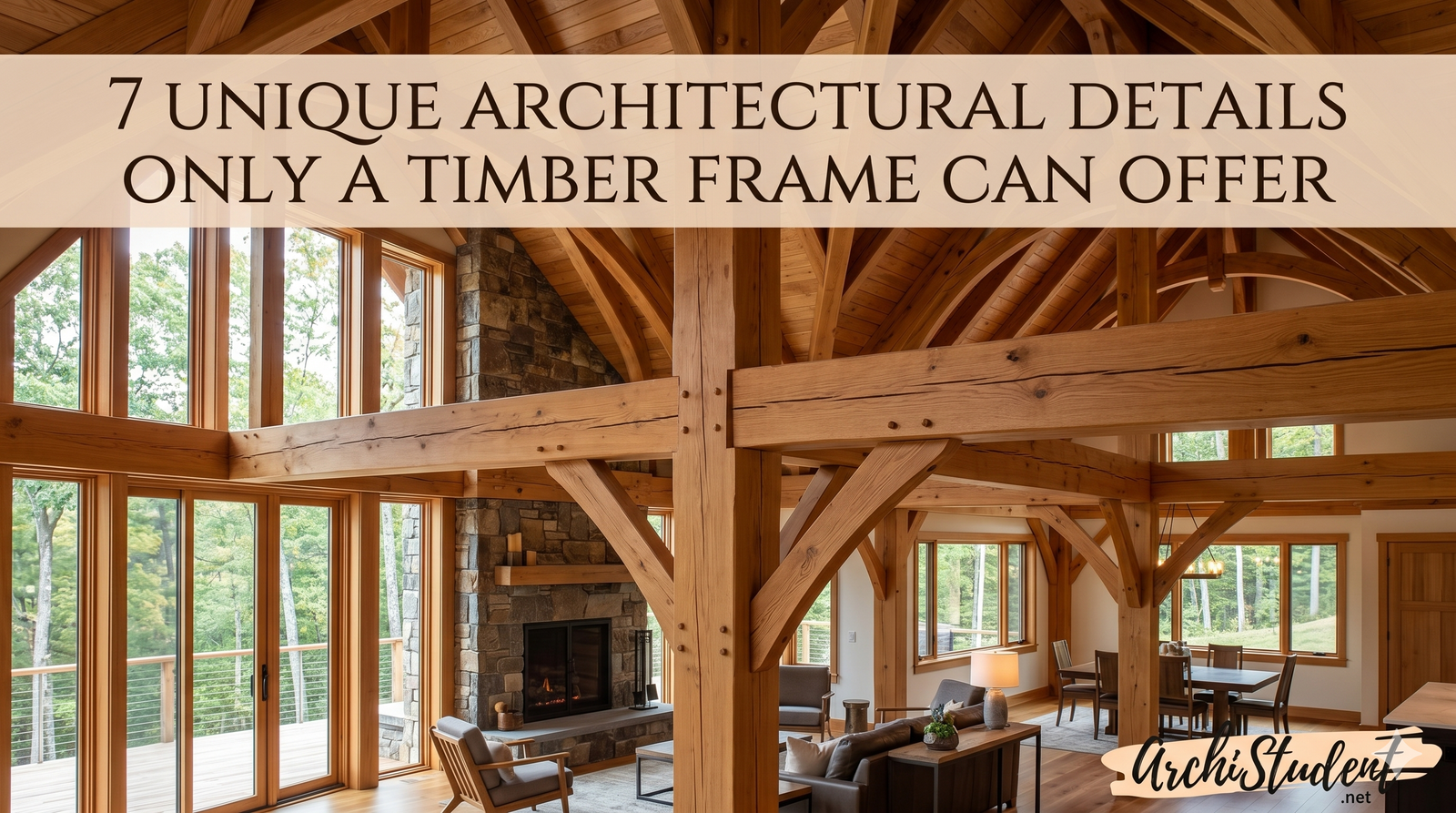
In a timber frame, the bones of the house aren’t hidden behind drywall; they are the design. Massive exposed beams create an instant sense of scale and drama, guiding the eye upward and across open spaces. The interplay of light and shadow over the grain of the wood changes throughout the day, giving the interior a living, breathing quality.
This visible structure also provides a sense of honesty in architecture. You can see exactly how your home stands. No illusions, no decorative imitations. Every beam and post is both functional and beautiful, carrying the load while telling the story of how the home was built.
On top of that, timber naturally helps regulate temperature. Its insulating properties help keep timber-frame homes naturally warm or cool. Combined with their ability to store and slowly release heat, this makes them energy-efficient.
2. Timber Variety That Shapes Mood and Identity
Hamill Creek Timber Homes notes that wood choice in timber framing isn’t just a technical matter; it’s a design language. Each species brings its own color, texture, and character. Douglas fir offers warm reddish tones and a straight grain that complements both rustic and modern interiors. Oak gives weight and grandeur, aging into a soft golden brown that deepens over time.
Some homeowners even mix timbers for contrast, like combining light pine with darker walnut or cherry details. Unlike steel or concrete, wood matures gracefully. The slight darkening, the knots, the subtle checks. They don’t signal wear, but evolution. Your home grows more beautiful as it ages, a living testament to time and environment.
3. Cathedral Ceilings That Create a Sense of Grandeur
Timber frames naturally suit open floor plans and soaring ceilings. Since the load-bearing structure doesn’t rely on interior walls, designers can create expansive, cathedral-style spaces that feel bright and airy.
Picture entering a great room where the roofline stretches high above, with curved or arched trusses adding rhythm and elegance. Exposed beams guide the eye upward, highlighting height while keeping a sense of warmth and coziness. Steel or concrete rarely achieves this combination of scale and comfort.
This blend of grandeur and intimacy is a hallmark of timber-frame architecture. The open design encourages natural light to fill the space, while the exposed structure adds character and a feeling of craftsmanship.
4. Curved Braces and Trusses That Add Sculptural Beauty
Unlike factory-made steel or concrete curves, timber arcs are individually shaped and crafted by hand, making each one slightly unique. Together, they turn ceilings into sculptural works of art, giving a home personality and character. Whether it’s the bold sweep of a king-post truss or the refined arch of a hammer beam, the craftsmanship is always front and center.
Around the world, curved timber trusses showcase this artistic and structural tradition. Westminster Hall in London, built in 1097, features a hammerbeam roof spanning 20.8 meters, supported by curved braces and beams. The Bradford-on-Avon Tithe Barn, from the 14th century, uses raised cruck trusses to create a dramatic interior.
These examples show that curved timber trusses not only support structures but also add timeless architectural elegance.
5. Seamless Indoor-Outdoor Connection
Timber frame architecture often highlights the surrounding landscape as much as the structure itself. Large timbers can span long distances without extra supports, allowing walls to open up to wide windows, glass doors, and outdoor living areas.
This flexibility lets architects blur the line between indoors and outdoors. Exposed beams can extend from interior ceilings to covered porches or pergolas, creating visual continuity across the property. The effect makes the home feel connected to its surroundings.
This design approach works especially well for homes in forests, mountains, or by lakes, where the connection to nature is essential. Timber framing enhances both the view and the living experience, making the interior and exterior feel like one cohesive space.
6. Handcrafted Joinery That Blends Art and Engineering
Most modern buildings rely on nails, screws, and metal brackets. Traditional timber framing, however, depends on precise joinery using mortise and tenon connections secured by wooden pegs. This method, passed down through centuries, creates strong, lasting structures without relying on visible fasteners.
Notably, this approach is a big art form in Japan, known as Kigumi. In Kigumi, timber pieces are carefully cut and interlocked so they hold together perfectly without a single nail. Temples, shrines, and historic homes built using this technique have survived for hundreds of years. They can even withstand earthquakes, all thanks to the clever design of each joint.
In modern timber-frame homes, the influence of Kigumi is still evident. Every mortise, tenon, and wooden peg showcases craftsmanship. These functional structural elements become works of art, adding character, beauty, and a sense of history to the home.
7. Structural Honesty That Invites Customization
One of the most defining aspects of timber framing is how openly it showcases its structure. Every post, beam, and brace is visible, allowing homeowners to highlight these elements without affecting the home’s integrity.
Looking to emphasize the main truss with subtle, hidden lighting? Simple. Prefer a minimalist, Scandinavian-inspired design with pale, clean timbers? Or perhaps a rustic lodge style with hand-hewn beams? Timber framing adapts to every vision while maintaining its authentic core.
This openness gives both architects and homeowners incredible flexibility. The structure becomes part of the design, turning functional elements into focal points that enhance the character, warmth, and personality of every space.
FAQs
What is the purpose of timber framing?
Timber framing provides the structural skeleton of a building using large wooden beams and posts. It allows for open, flexible interior layouts without relying on interior walls. Beyond strength, it also highlights craftsmanship, turning the structure itself into a key design feature.
What are the disadvantages of a timber frame?
Timber frame construction can be more expensive upfront than conventional stick-built homes due to the cost of large, high-quality timbers. It requires skilled labor for precise joinery, which can limit availability in some areas. Maintenance may also be higher to protect the wood from moisture and pests.
What kind of timber is used for framing?
Softwoods like Douglas fir, pine, and spruce are the most common choices for timber framing. They are strong, lightweight, and easy to work with. These species balance durability with flexibility, making them ideal for both structural support and aesthetic appeal.
Overall, in an age of prefab and mass production, timber frames remind us what architecture truly is. Their open layouts, energy efficiency, and sustainable materials make them both practical and beautiful. Every exposed beam, joint, and curve reflects skill, patience, and timeless design. Unlike concrete or steel, timber frames tell a story, connect us to nature, and bring soul to a home. They aren’t just structures; they are living works of art.
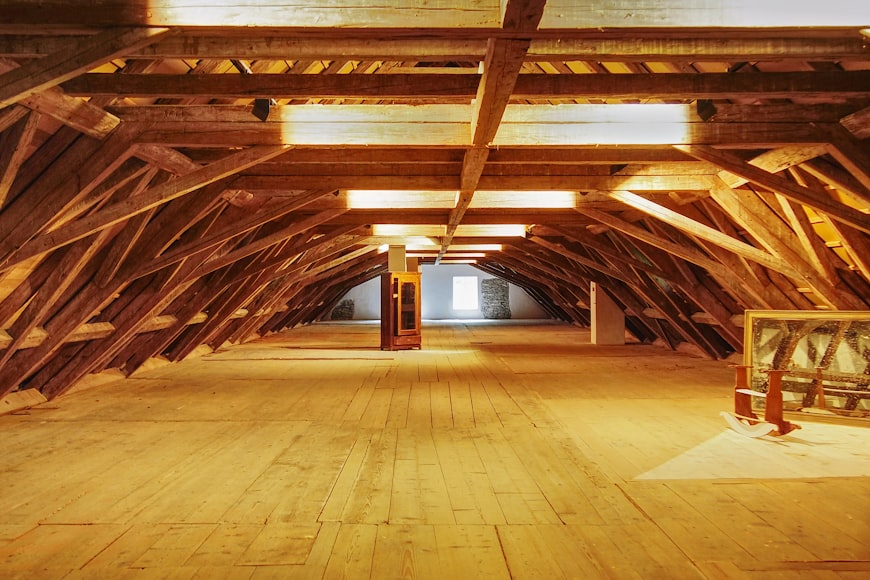
Image Source: A large room with wooden floors and beams